This was originally published in Tenoua Magazine on August 21, 2026
The alarm goes off at 6:00. I don’t need to be anywhere until 9:30, but my journeys don’t look like most people’s. There are mornings in Paris when the simple act of crossing the city, a relatively easy commute that most take for granted, reveals more about there nature of my life than I care for it to. It’s hardly romantic as many reading from outside of France may imagine.
The Paris Métro isn’t designed for people like me. The staircases are narrow and steep ; lifts are rare or broken ; escalators are in repair for weeks at a time while the RATP app says that they work, of course ; platforms fill quickly with the compressed, violent, and impatient movement of my fellow commuters. Fluorescent lights hum overhead in the stations and the train. Announcements echo throughout the space without any clarity because of all the stimuli. The choreography of the space assumes a certain rhythm, a certain stamina, a certain body, a certain mind, a certain level of health, a certain nervous system.
From the time I leave my home until the time I reach the station, my body is already calculating – where to stand, how to brace myself, how to conserve enough energy to arrive intact. Will I be able to study when I arrive at school ? Will I pass out when I get there ? How will I study for 7 hours today ? Will I have a meltdown ? A heart flare‐up ? The vigilance begins before I even step onto the train, itself a sensory, physical, and emotional nightmare. I’m exhausted already. It’s not even 8AM yet.
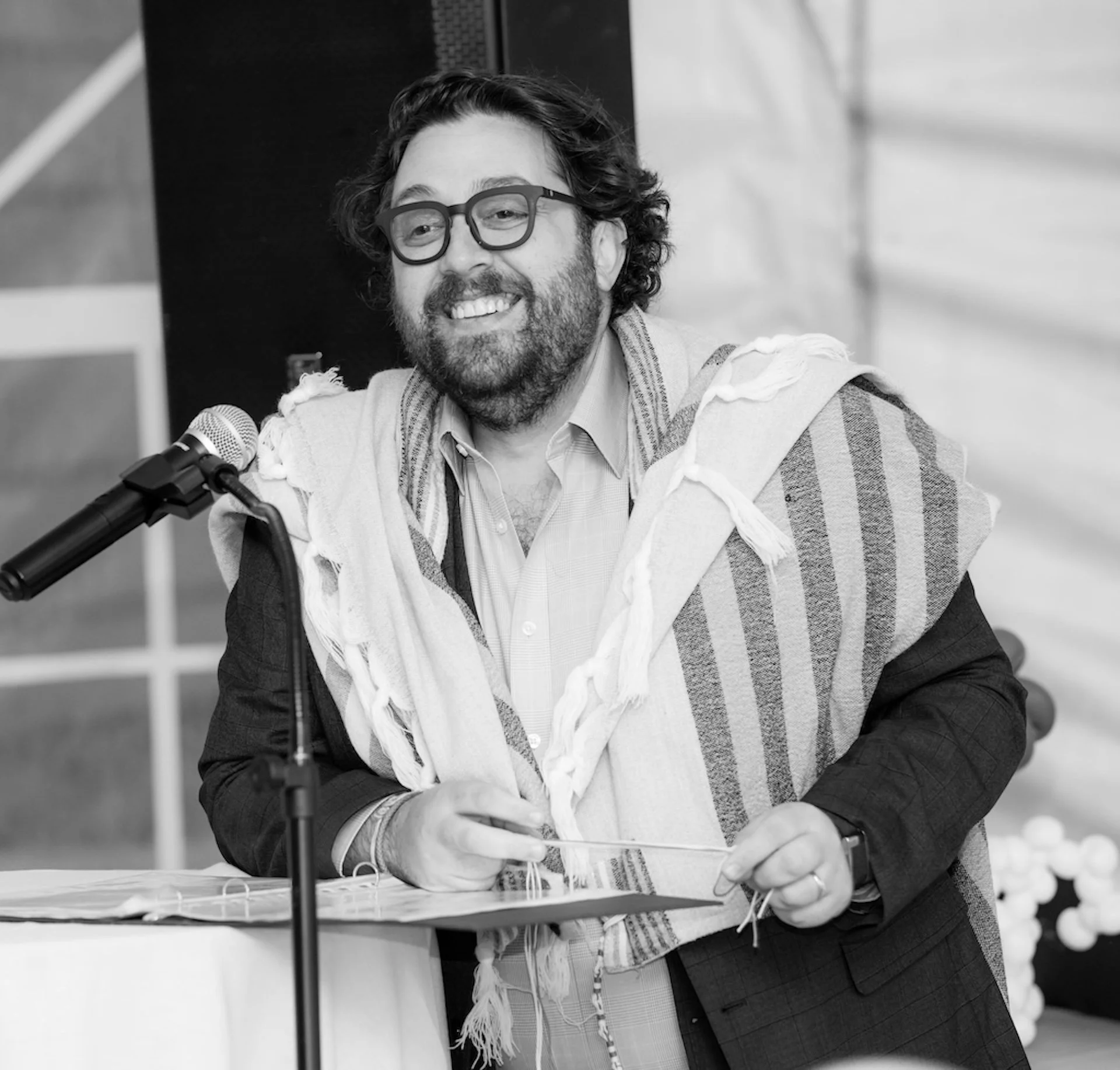
It’s within this landscape that I am training to become a rabbi. If I succeed, I’ll be the first openly autistic rabbi ordained in France. I spend my days studying Jewish texts and developing my pastoral and community organising skills with the same bodymind that just braced itself against the rail of an uneven and steep staircase because of a broken escalator and a crowd that moves as if slowness were a crime, and tells you as much. I enter the beit midrash already depleted, already calculating how long I can sit upright, how much noise I can tolerate, whether my heart will behave or make me pass out.
And yet, the beit midrash is also one of the places outside my own home where I can be myself. One of the places where I feel most alive. The texts of Jewish tradition don’t rush me. The opposite, in fact. They invite me in to stay awhile. I can approach them at my own pace. Apply my own way of thinking. They allow and even demand contradiction. They linger. They argue. They refuse simple answers. It’s one of the only spaces in the world where intensity, debate, and passion coming from a disabled person are not automatically a problem. They are a very real logo of my life. And this is a very Jewish way of learning. In theory, at least.
This is the place from which I’m writing.
Not from outside traditional Jewish life. Not from outside Torah. Not from some detached conceptual position where disability becomes an interesting ethical category or a theme for communal reflection to make others feel good about their so‐called “inclusivity.” Nor is this an angry critique.
I’m writing from both the Métro platform and from the beit midrash. From both the body that has to physically fight against the the city and the mind that comes alive in the margins of the Talmud. Even speaking about the mind and body as a duality is a problem, as they’re united, of course. One influences the other. They are, in fact, the same. I speak from both the experience of being held by Jewish text and harmed by Jewish structures. From the contradiction of loving a tradition that sustains me and giving my life meaning while also belonging to communities that often have no idea how to receive and accept people like me without negating and effacing the most essential parts of ourselves.
I’m a disabled autistic rabbinical student. I’m also a teacher of Torah, an autism educator, a disability peer‐support coach, and someone who works with Jewish and non‐Jewish organisations around the world on disability and neurodivergence. I’m studying full‐time in rabbinical school and the university while also working what often feels like four full‐time jobs. I’m Autistic and have ADHD, POTS, dyspraxia, dyscalculia, and the accumulated toll of navigating systems that treat disabled survival as an administrative and personal inconvenience.
I don’t give you this background so you can feel pity for me. It’s also not about creating an identity around it. Nor a game to list off each thing which makes me life hard. It’s simply the terrain and the world in which I live and it’s an essential part of my life and experience.
My disabilities shape how I rest, wake up, and how I travel. They inform how I sit, how I learn, how I teach, how I pray, how I recover, how I relate to the Divine, how I understand community, and how I understand Torah. My disability isn’t an extra layer added on top of my Jewish life. My autistic bodymind isn’t an inconvenient footnote to my rabbinic education. Rather, it’s exactly the place from where my Torah begins.
Now, this is particularly important to state out loud, because disabled people are constantly asked to translate our lives into language that makes others, particularly the non‐disabled, comfortable. We’re expected to make our pain legible, but not too disruptive. Honest, but not too angry. Personal, but not too revealing. Urgent, but not too demanding. We are allowed to be moving, perhaps even inspiring, as long as we don’t ask anyone to change the structure of the room or how they’re living their lives.
I’m not even slightly interested in that deal. I reject it. It is, in fact, ableist. It denies my humanity.
When I say the Métro is inaccessible, I’m not making a metaphor or commenting on how it isn’t well run. I am talking about the fact that my day may be functionally destroyed before it has begun. You may say “I don’t like it either.” An abled preference isn’t the same as a disabled need. If we have something in common, it’s because we’re both human. I’m talking about the way a hostile stare, a staircase, the lights, overcrowding, or the fear of being physically assaulted for using a disabled seat (which has happened to me, multiple times) can accumulate in my body before I ever open a book at school. I’m talking about the fact that by the time others see me in class, they may be seeing only the small visible surface of a much larger calculation.